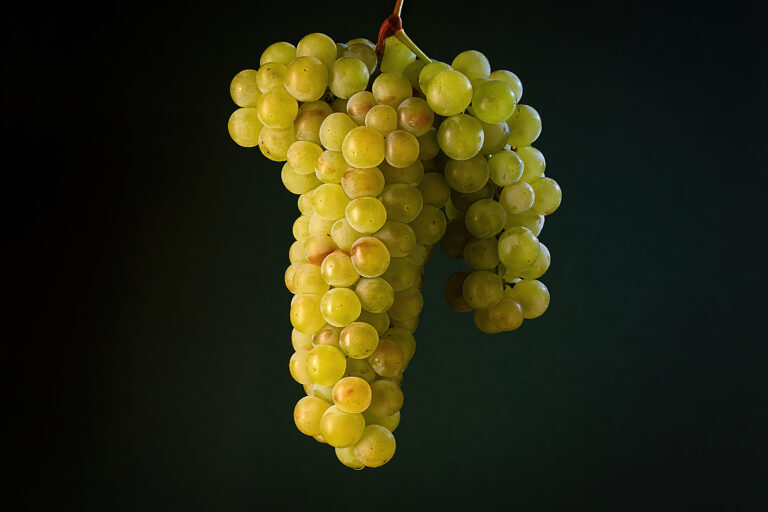
Spinas Muscat – White Grape Variety from Crete
#MuscatWhite
White Muscat is a white grape variety known by many synonyms across Mediterranean regions. The prevailing view is that the variety originated in Greece, where it is cultivated primarily for sweet wines, but also for dry and sparkling styles. It has a complex and spicy floral grape aroma, which can sometimes be intense and piercing.
The History of the Variety
According to Negrul (1946), White Muscat is identical to the ancient Greek variety Melissea and the Roman Apiana, which was mentioned by Pliny the Elder.
Due to its wide spread over the centuries, it has acquired numerous names (e.g. Muscat Blanc à Petits Grains in France, Moscatel Bianco or d’Asti in Italy, and in Greece: Muscat of Samos, Corfu, or Spinas).
In Greece, its primary cultivation center was originally the island of Samos, from where the variety spread to other regions and took on local place names.
It is likely that Spinas Muscat was introduced to western Crete by refugees or settlers from Samos around the 6th century AD.
Vineyard cultivation
White Muscat is grown in almost all wine-producing countries of both the Old and New World, covering approximately 45,000 hectares worldwide.
In France, it is the most widespread Muscat variety with 7,620 hectares under vine, while in Italy there were 13,280 hectares recorded as of the year 2000.
In Greece, cultivation is primarily found on the islands of Samos, Kefalonia, Zakynthos, Limnos, and Rhodes, as well as in Patras, Rio, and Crete—totaling approximately 1,900 hectares.
White Muscat thrives in copper-rich, schistose soils that are well-aerated and well-drained.
The soil in the Dafnes region ranges from medium-textured to clay-loamy. It is rich in calcium carbonate, with concentrations exceeding 40%.
This calcium carbonate neutralizes soil acidity, with the pH ranging from 7 to 8.5—ideal for the absorption of most micronutrients by the vine.
Additionally, calcium carbonate improves soil structure, ensuring good drainage and stable soil temperatures.
These characteristics contribute to optimal phenolic and technological ripeness of the grapes, resulting in wines with rich body, color intensity, and balanced acidity.
Vidiano is resistant to heat and drought, maintaining its aromatic character to an excellent degree.
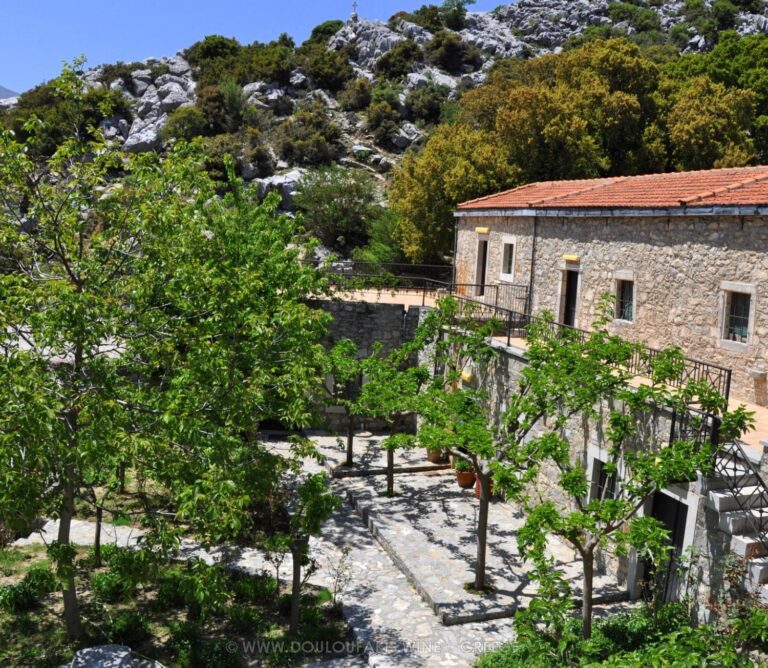
The vineyards in Dafnes area are located northeast of Psiloritis Mountain, which is the highest of the island, with an altitude 2456m. The relief of the wider area is formed by rolling hills, almost parallel to each other, extending from the northern part of the prefecture to the south at an altitude of 300-500m. The vineyards are planted on the slopes of these hills, east or west oriented.
The elongated valleys that are formed between the hills serve as natural canals, transferring the conducive chilled breeze from Cretan Sea to the center of the prefecture, maintaining the temperature at the slopes at very good levels all around summer. Rainfall is rare during the summer, so plants and grapes avoid virus infections.
Due to this unique microclimate the cultivation of vines in the area is lasting for many centuries and written historical sources can be found since the time of Venetian rule from 11th to 15th century AD.
White Muscat is extremely sensitive to powdery mildew and also susceptible to downy mildew, botrytis, grape berry moth, and infectious degeneration.
White Muscat shows its best performance in elevated areas with ample sunlight, where the gradual progression of temperatures allows for slow and balanced grape ripening.
The vineyards in the Dafnes area are located northeast of Mount Psiloritis (Ida Mountain).
The terrain of the region is shaped by three main hill chains, running almost parallel from the north to the south of the prefecture, at elevations of 300–500 meters.
The slopes of these hills are planted with vines, mainly facing east or west.
Long valleys formed between the hill chains act as natural channels, funneling cool air from the Cretan Sea toward the interior, maintaining moderate summer temperatures.
Rainfall during summer is rare, which helps keep vines and grapes healthy.
It is precisely this unique microclimate that has supported viticulture in the area for centuries—since the time of the Venetian occupation, from the 13th to the 17th century.
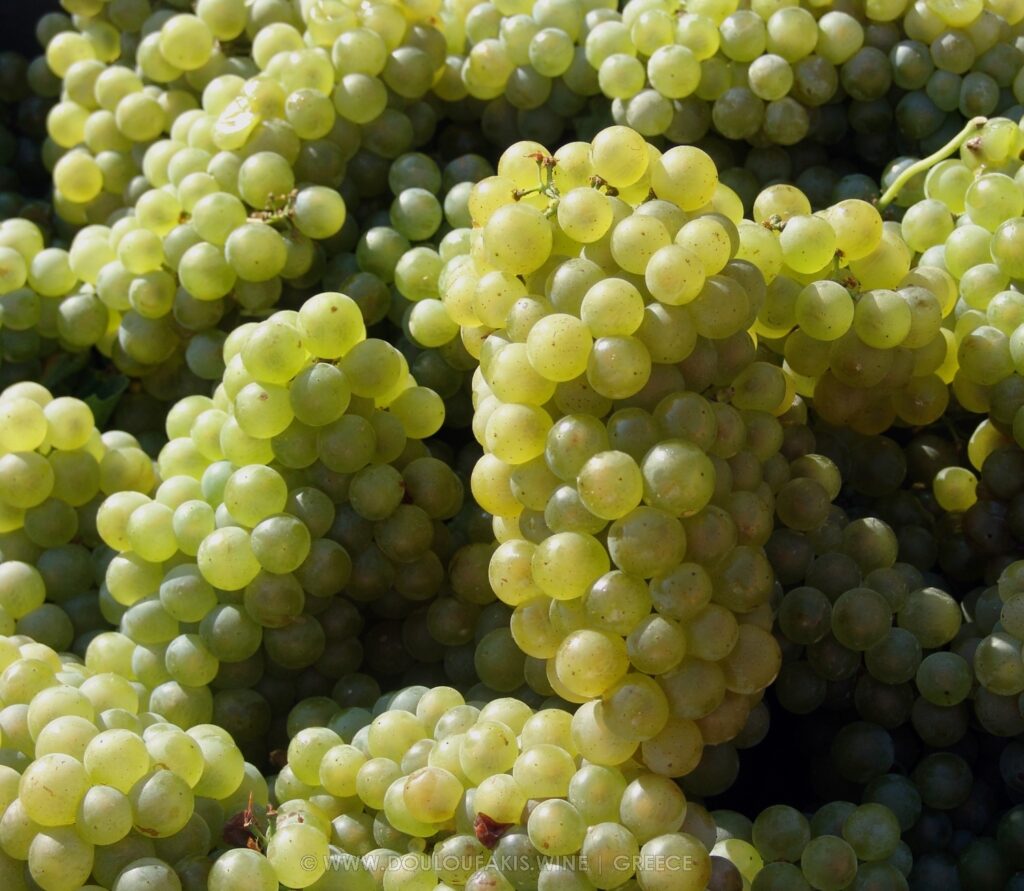
Pruning method vidiano
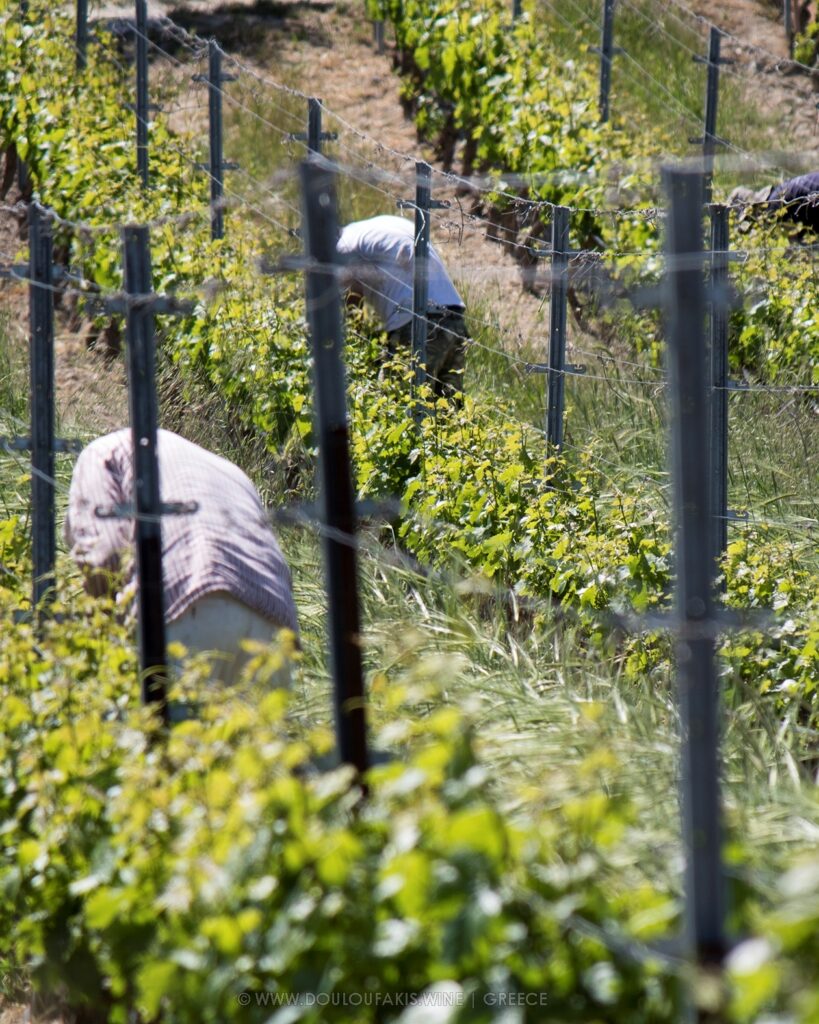
Depending on the cultivation area, the vines are trained either in low goblet (bush) form or in linear systems such as unilateral or bilateral Royat. The vines are pruned short (spur pruning).
White Muscat is a highly productive variety, as numerous buds break on 2nd, 3rd, and even 4th-year wood
Vineyards planted with the White Muscat variety are typically established at a density of around 3,500–4,000 vines per hectare (350–400 vines per stremma).
They are cultivated in linear systems with row spacing of 1.10 m × 2.5 m.
The vine description of the Muscat of Spina variety
Shoot Tip (Apex):
Moderately open to fully open, green, cobweb-like in texture (arachnoid).
Young Leaf:
Bronze to pale green with a purplish edge, also cobweb-like (arachnoid).
Shape & Size: Medium, circular to slightly truncate, three-lobed or five-lobed.
Blade (Lamina): Thin, flat, slightly blistered, smooth and green on the upper surface, cobweb-like on the lower.
Petiolar Sinus: Lyre-shaped or V-shaped with converging lobes, very deep.
Veins: Yellow-green, prominent, with sparse, creeping or upright hairs on the underside.
Petiole (Leaf Stalk): Short, smooth, green or pinkish.


Phenological Data
Spinas Muscat Vineyards
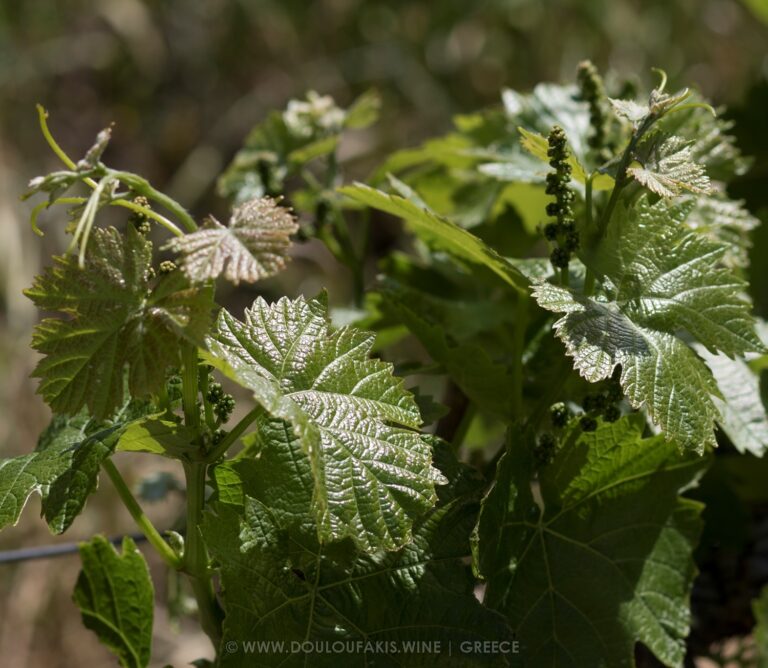
Soil and climatic conditions in each region significantly affect the phenological stages of the variety. In Dafnes, Crete, we have generally observed the following:
Budbreak: March 10–20
Full Shoot Growth: 2nd ten days of April
Flowering: May 15–20
Veraison: Late August to early September
Technological Characteristics of Fully Ripe Spinas Muscat Must
Sugar Content: 230–250 g/L
Total Acidity: 5.4–5.8 g/L
pH: 3.4–3.5
Greek Legislation for the Spinas Muscat Variety
Spinas Muscat is among the permitted wine grape varieties in the following PDO zones:
PDO Samos, PDO Muscat of Rhodes, PDO Muscat of Rio Patras, PDO Muscat of Patras, and PDO Muscat of Kefalonia (for sweet wines).


Characteristics of Wines Made from Spinas Muscat
White Muscat is a versatile variety suitable for dry, sweet, sparkling, and fortified wines.
It has a distinctive and intense grapey aroma which, oddly enough, is quite rare.
Dry expressions of this variety often reveal floral, citrus, and spicy notes.
Sweet and semi-sweet sparkling wines may show aromas of melon, nectarine, and honey, while dessert wines are frequently aged in oak barrels for months or even years.
Barrel aging enhances concentration and adds notes of dried fruits and nuts.
Douloufakis Wines from the Spinas Muscat Variety

Enotria White
- 70% Vilana | 20% Sauvignon Blanc | 10% Spinas Muscat
- Dry wine
- Fermented in stainless steel tanks
Serving suggestions & food pairings available upon request

Epoch White Semi-Sweet
- 50% Spinas Muscat | 50% Vilana
- Semi-sweet wine
- Fermented in stainless steel tanks
Serving suggestions & food pairings available upon request
Serving Spinas Muscat
Like all white wines, Spinas Muscat is best enjoyed chilled.
The ideal serving temperature is between 9–12°C.
Food Pairing
Food pairing recommendations should always consider the unique character of each specific wine.Reviews available from reputable wine critics upon request.
Douloufakis Wine
From Crete, Greece

White Wines
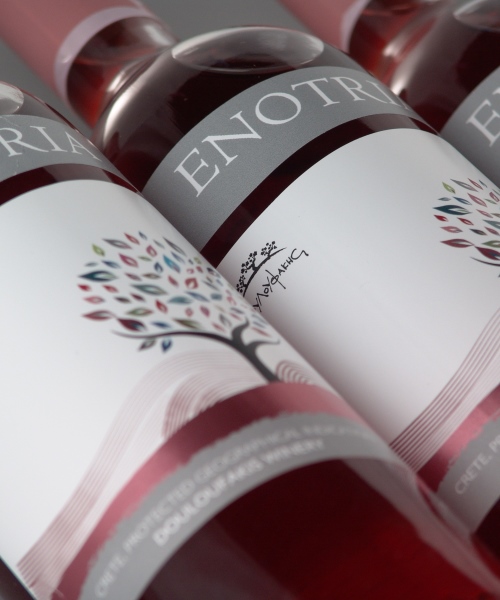
Rose Wines
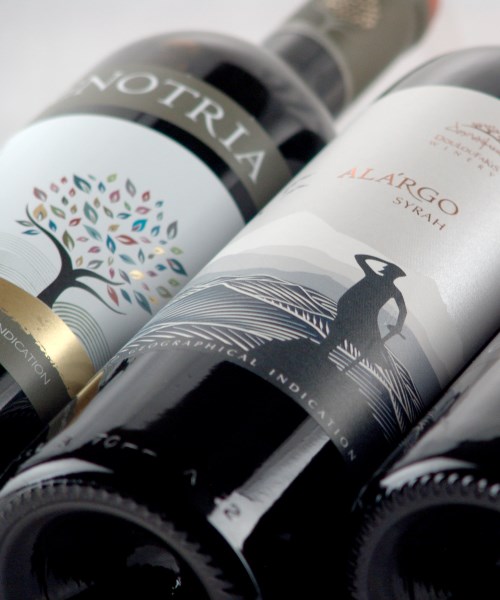
Red Wines

GREEK CRETAN WINERY | GREEK WINES FROM CRETE – Douloufakis Winery
DOULOUFAKIS CRETAN GREEK WINERY – GREEK WINES FROM CRETE: OUR VINEYARDS ARE LOCATED IN CRETE, GREECE.
- PB E6 Dafnes Heraklion, Crete, Greece, PO 70003
- REG. Nο (HELLENIC BUSINESS REGISTRY) 160335327000
- 2810 792017
- 2811 753113
- info@douloufakis.wine
About
Privacy
COPYRIGHT © DOULOUFAKIS WINERY
Size & Structure: Medium-sized, simple, rarely winged, cylindrical-conical or cylindrical in shape, compact to very compact.
Berry Attachment: Short peduncle, difficult to detach.
Size & Shape: Small to medium, nearly spherical.
Skin: Moderately thick, golden yellow, sometimes greenish-yellow, with a fine waxy bloom.
Flesh: Soft, moderately juicy, very sweet, with a characteristic Muscat aroma.
Typically 2–3 per berry, most often two. Curved, pear-shaped with a small, curved, pointed beak.
Brown to yellowish-brown, elliptical in cross-section, with smooth, ribbed surfaces.
The vine description was based on “The Cretan Grapes”, a book by Manolis Stavrakakis and Maritina Stavrakaki.
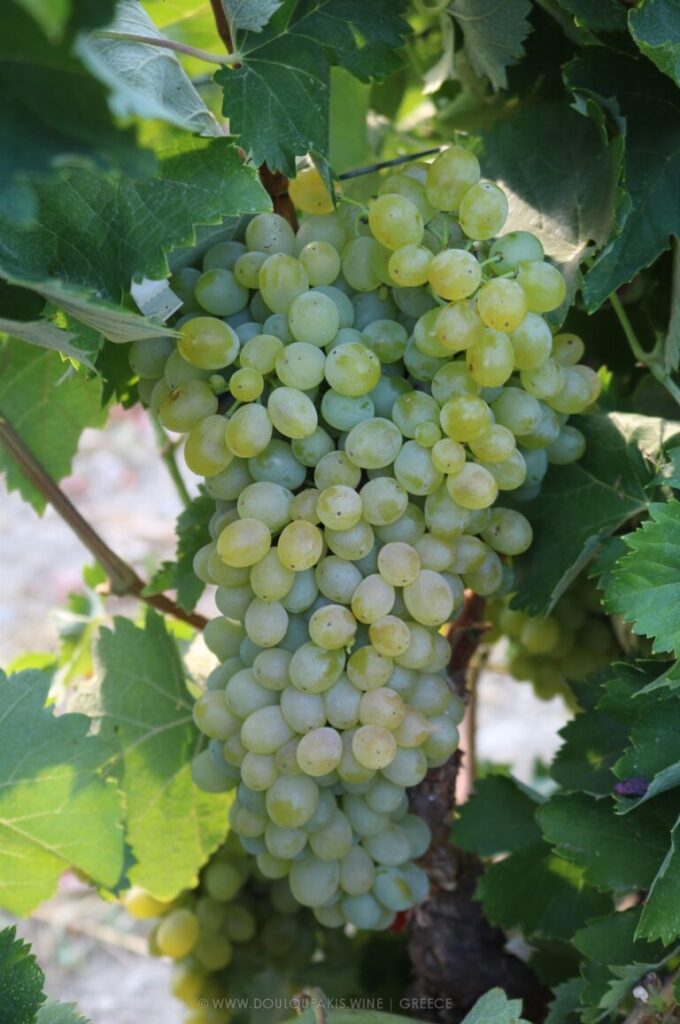
The vine description was based on “The Cretan Grapes”, a book by Manolis Stavrakakis and Maritina Stavrakaki.
Phenological Data
Spinas Muscat Vineyards
Soil and climatic conditions in each region significantly affect the phenological stages of the variety. In Dafnes, Crete, we have generally observed the following:
Budbreak: March 10–20
Full Shoot Growth: 2nd ten days of April
Flowering beginning – full flowering: May 15-20
Veraison: Late August to early September
TECHNOLOGICAL CHARACTERISTICS OF THE MUST OF A FULLY MATURED MUSCAT OF SPINA
Sugars: 230 – 250g/L
Total acidity: 5.4 – 5.8 g/L
Active Acidity pH: 3.4 – 3.5
Greek legislation for Spinas Muscat variety
Spinas Muscat is among the permitted wine grape varieties in the following PDO zones:
PDO Samos, PDO Muscat of Rhodes, PDO Muscat of Rio Patras, PDO Muscat of Patras, and PDO Muscat of Kefalonia (for sweet wines).

The Characteristics of Wines Made from Spinas Muscat
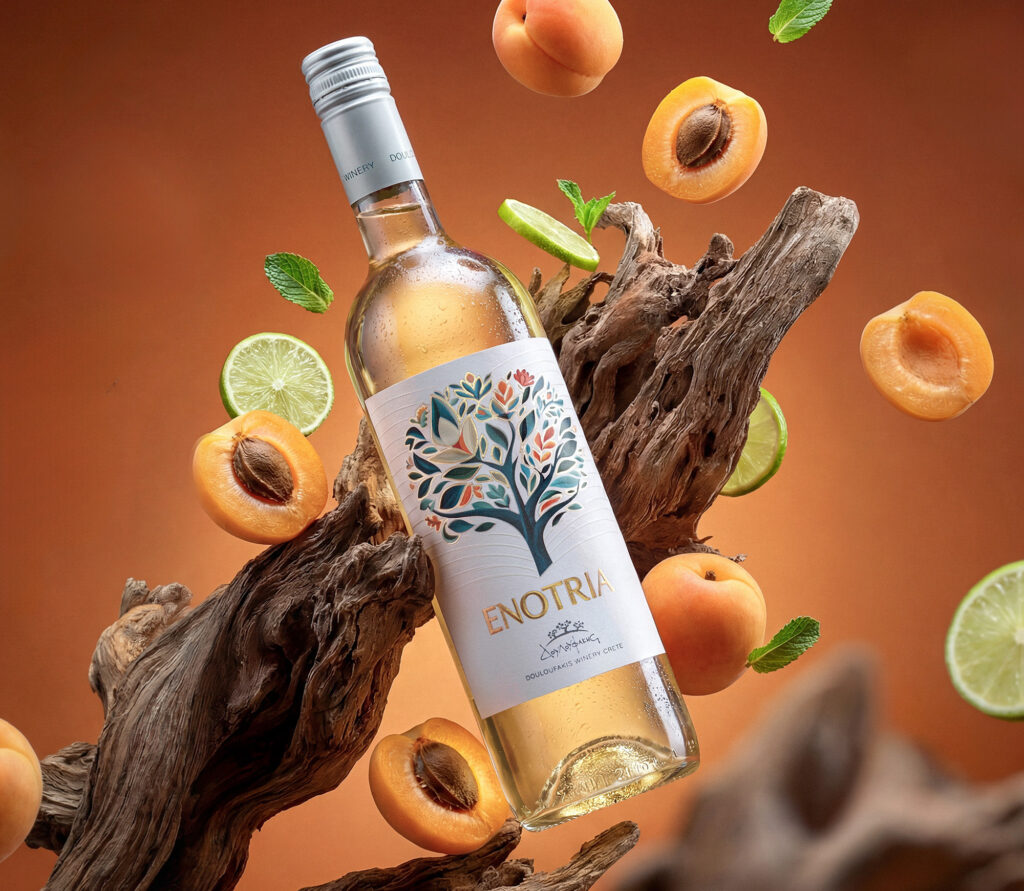
White Muscat is a versatile variety suitable for dry, sweet, sparkling, and fortified wines.
It has a distinctive and intense grapey aroma which, oddly enough, is quite rare.
Dry expressions of this variety often reveal floral, citrus, and spicy notes.
Sweet and semi-sweet sparkling wines may show aromas of melon, nectarine, and honey, while dessert wines are frequently aged in oak barrels for months or even years.
Barrel aging enhances concentration and adds notes of dried fruits and nuts.
DOULOUFAKIS – WINES FROM SPINAS MUSCAT VARIETY
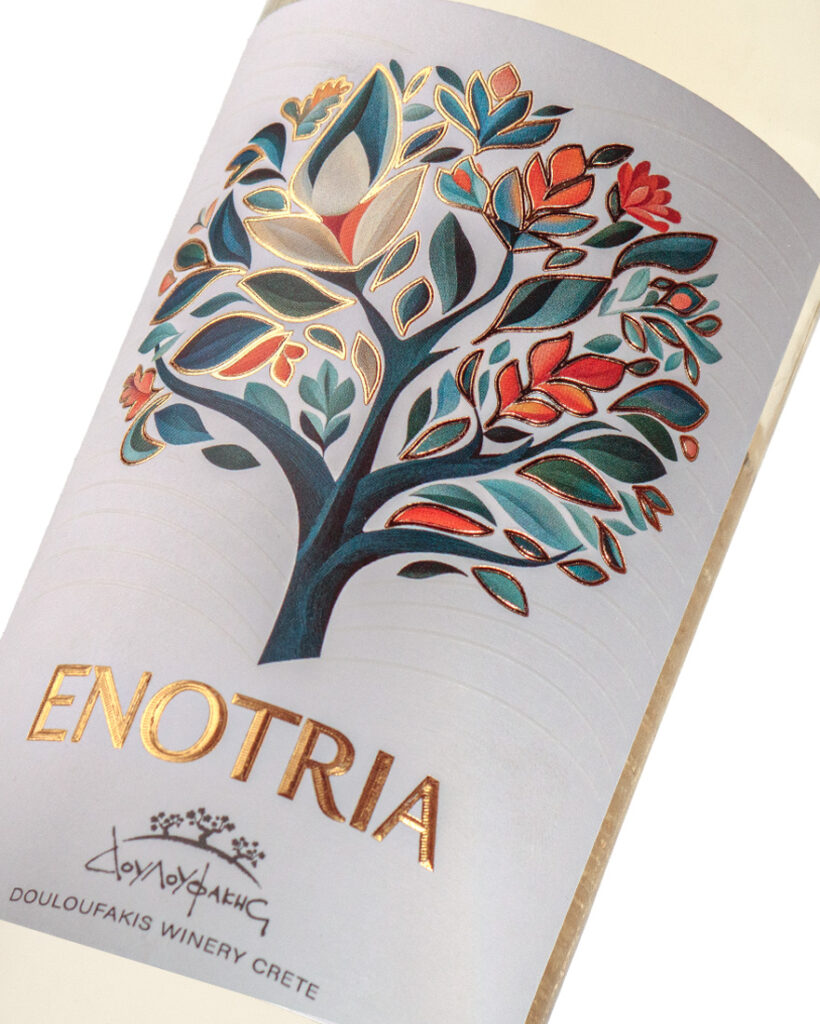
Enotria White
- 70% Vilana | 20% Sauvignon Blanc | 10% Spinas Muscat
- Dry wine
- Fermented in stainless steel tanks
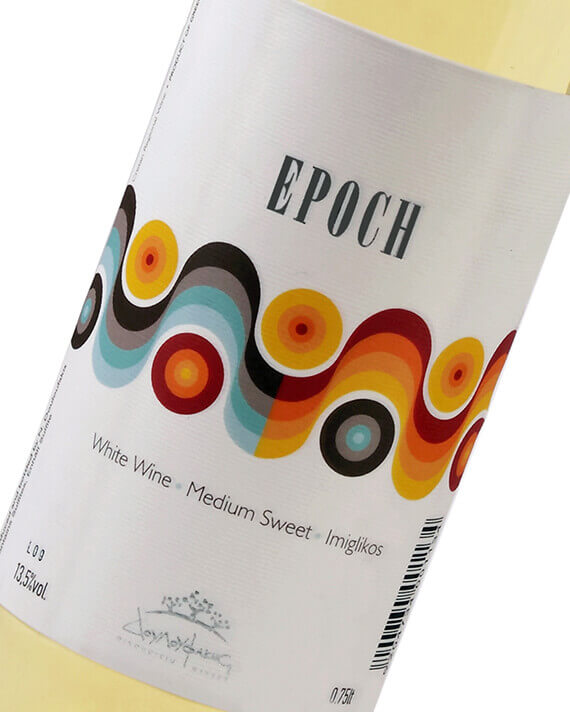
Epoch White Semi-Sweet
- 50% Spinas Muscat | 50% Vilana
- Semi-sweet wine
- Fermented in stainless steel tanks
Serving Spinas Muscat
- Like all white wines, Spinas Muscat is best enjoyed chilled.
The ideal serving temperature is between 9–12°C.