Kotsifali
A red grape variety native to Crete.
#Kotsifali
The most important indigenous red grape variety of Crete.
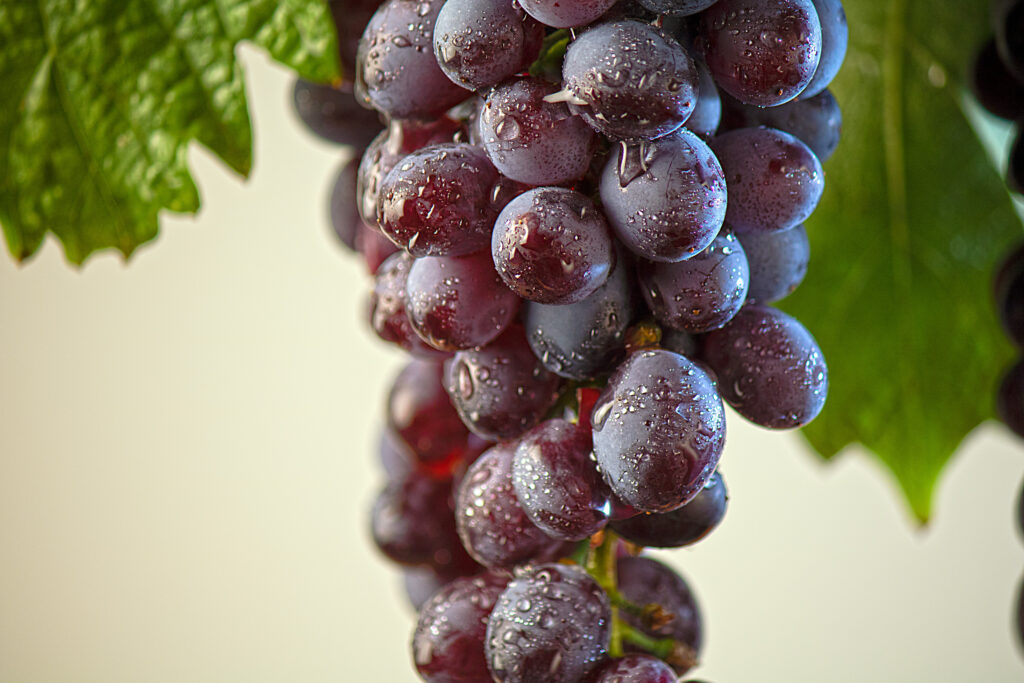
It has been cultivated for many centuries and is mentioned in texts dating back to the 14th century. It played a role in the production of the renowned Cretan Malvasia wine. Its name is said to derive from the blackbird (kotsyfi in Greek), as the bird is fond of pecking at its sweet grape berries.
The history of the grape variety
Kotsifali
Kotsifali is considered an indigenous grape variety of Crete and is believed to have been cultivated on the island since the Minoan era. Although there are no direct written references using its modern name, the existence and importance of viticulture in ancient Crete is well documented. Varieties like Kotsifali are likely evolutionary remnants of that distant time.
Vineyard cultivation
The total cultivated area of the Kotsifali variety in the viticultural region of Crete is approximately 400 hectares (4,000 stremmas). It is primarily grown in the Heraklion and Lasithi prefectures.
Kotsifali thrives in low-fertility, calcareous clay soils.
The soil in the Dafnes area ranges from medium-textured to clay loam and is rich in calcium carbonate, exceeding 40%. The presence of calcium carbonate neutralizes soil acidity, with pH levels ranging from 7 to 8.5—ideal for the absorption of trace elements by the vine.
Calcium carbonate also improves soil structure, ensuring good drainage and stable temperature conditions. These soil characteristics support excellent phenolic and technological ripening of the grapes, contributing to wines with rich body and structure, deep color intensity, and balanced acidity.
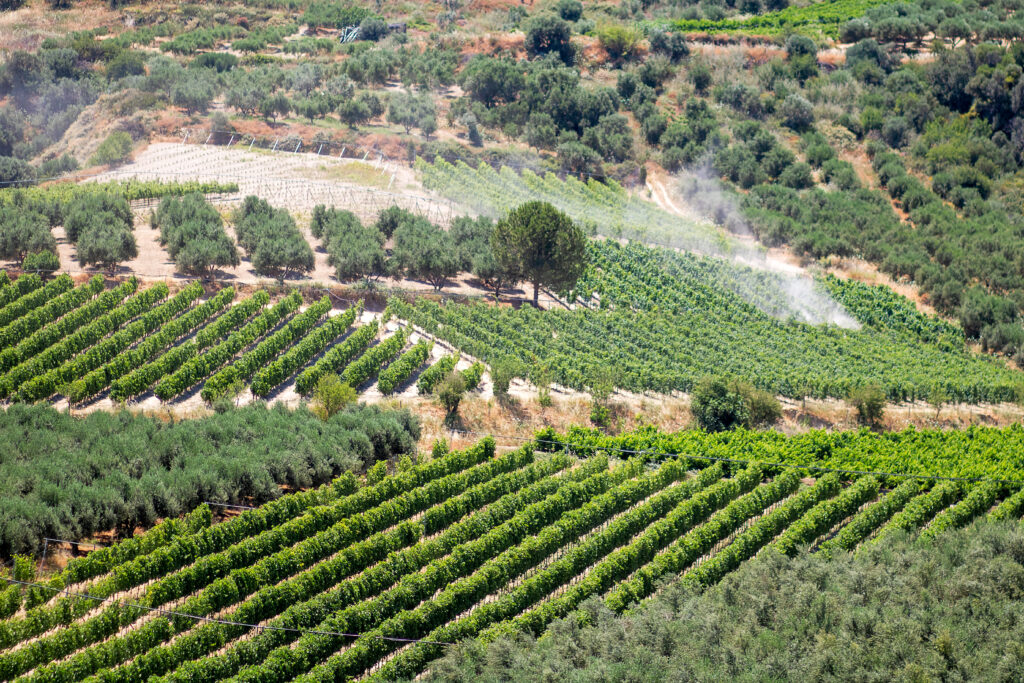
The vineyards of the Dafnes region are located northeast of Mount Psiloritis.
The terrain of the wider area is shaped by approximately three main hill ranges, running almost parallel from the northern to the southern part of the region, at an altitude of 300–500 meters.
The vineyards of Dafnes are planted on the slopes of these hills, mostly facing east or west.
The elongated valleys between the hills act as natural channels, carrying cool air from the Cretan Sea toward the center of the region, keeping summer temperatures at excellent levels. Rainfall is rare during the summer months, allowing the vines and grapes to remain healthy.
It is this unique microclimate that has enabled vine cultivation in the area for centuries, dating back to the Venetian era, from the 13th to the 17th century.
The Kotsifali variety shows good resistance to downy mildew and powdery mildew but is sensitive to infectious degeneration.
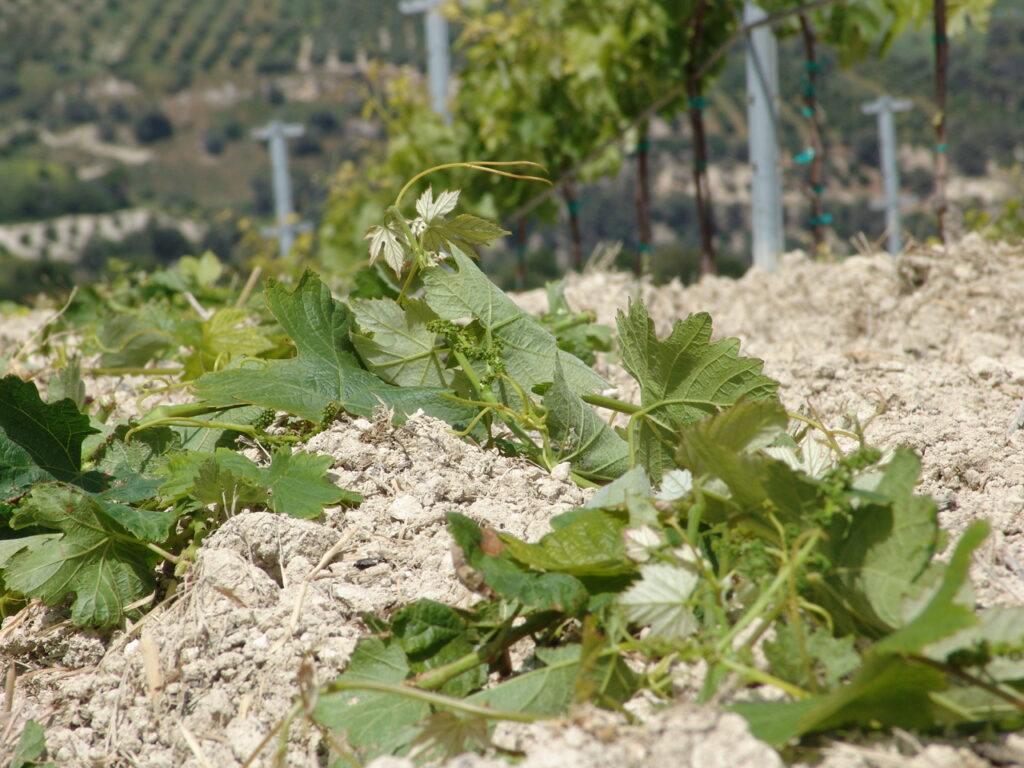
Pruning method Kotsifali
It is trained in goblet (cup-shaped) form and bilateral cordon (Royat), and it can be pruned short, leaving two buds.
The Kotsifali variety is vigorous, highly productive, and early ripening.
It shows moderate resistance to drought and diseases, with notable sensitivity to downy mildew and botrytis.
Its must is characterized by high sugar content and low acidity.
Varietal wines made from Kotsifali typically have high alcohol levels, low acidity, and unstable color.
The vine description of the Vidiano variety
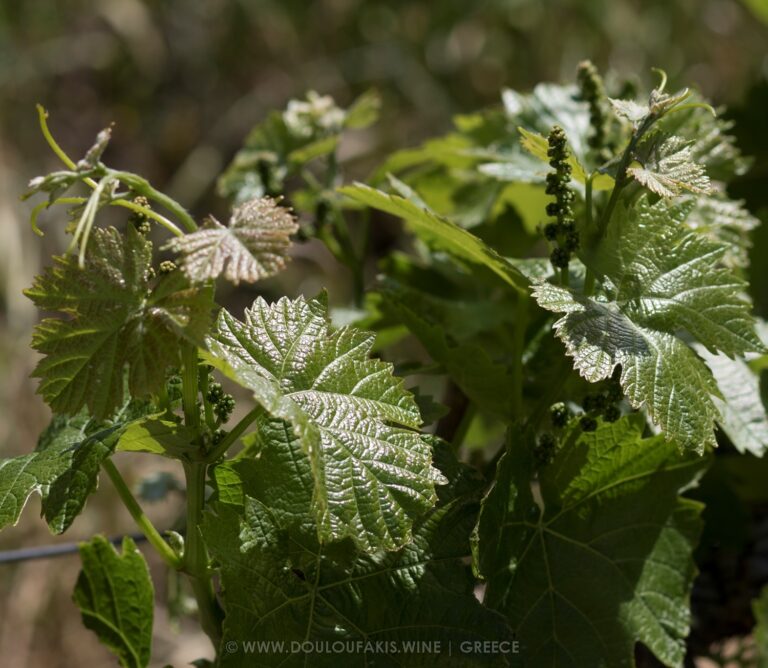
Shoot tip: of white-green colour with red margin, open and felty.
Young leaf: of yellow-green colour with bronze areas, cobwebby to downy upper side and felty lower side.
Shape–Size: Medium to large, round, five-lobed. The lower sinuses are deep and narrow, U-shaped.
Veins: Green, smooth and slightly hairy around the petiole area on the upper surface; green, downy, and slightly shiny on the underside.
Blade: Flat, sometimes slightly wavy, thick, with faint blistering.
Teeth: In two rows, uneven in size, small with slightly curved sides, blunt. Petiole green with reddish streaks, striated, generally smooth, sometimes slightly hairy, short.
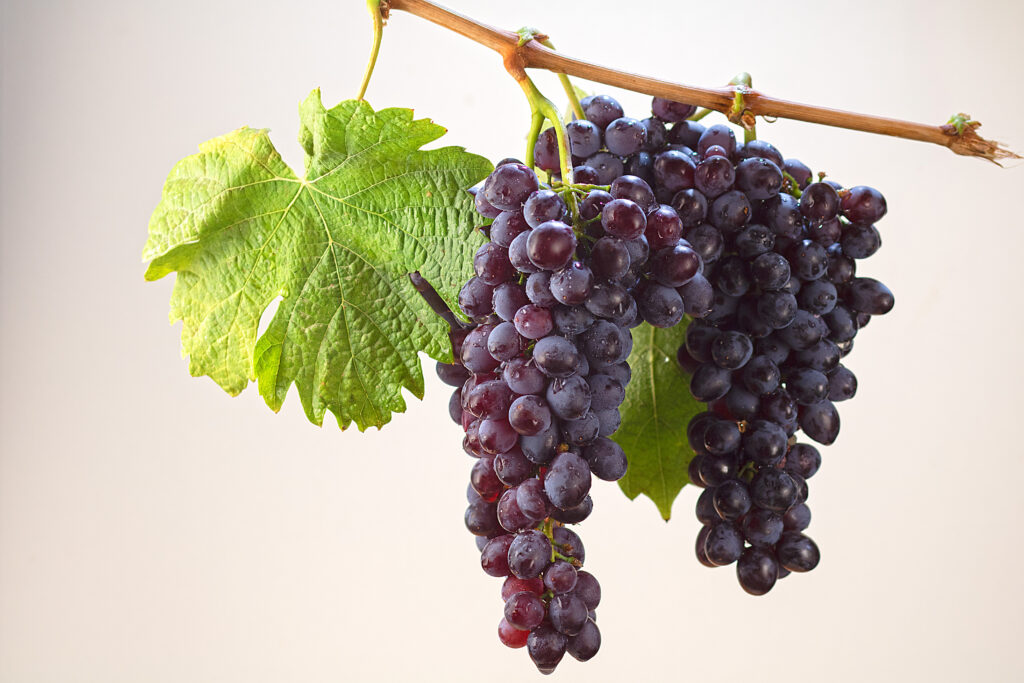
Medium-sized, conical or cylindrical-conical, dense, with evenly sized but unevenly colored berries. Green berries are often found among the ripe ones. The peduncle is thick, short, strong, green, and difficult to detach.
Small to medium-sized, almost spherical to slightly flattened.
The skin is of medium thickness, resilient, reddish-purple to reddish-brown, with abundant bloom.
The flesh is soft, colorless, slightly tart, flavorful, and juicy.
The pedicel is short and easily detachable.
The berries usually contain 1–3 seeds, typically two per berry, medium-sized, spindle-shaped.
Yellowish-brown to grayish, elliptical or circular in cross-section, angular, with lenticels, smooth.
The ampelographic description is based on the book “The Cretan Grapes” by Manolis and Maritina Staurakakis.
Phenological Data
Soil composition and climatic conditions play a decisive role in the phenological development of each grape variety. In the region of Dafnes, we have generally observed the following stages for Kotsifali:
Full ripening: 3rd ten-day period of August to 1st ten-day period of September
Budbreak: 3rd ten-day period of March
Full shoot growth: 3rd ten-day period of April
Full flowering: May 16–20
Veraison (onset of ripening): 3rd ten-day period of July
Technologische Eigenschaften von Kotsifali
Active acidity (pH): 3.3–3.9
Sugars: 230–250 g/L
Total acidity: 4.4–6.5 g/L
Greek legislation for kotsifali variety
According to current Greek legislation, the Kotsifali grape variety is recommended for cultivation in the viticultural region of Crete and is also permitted in the viticultural regions of the Cyclades and the North Aegean.
It is co-vinified with the Mandilaria variety for the production of dry red wines with Protected Designation of Origin (PDO) status, specifically “Archanes” and “Peza.”
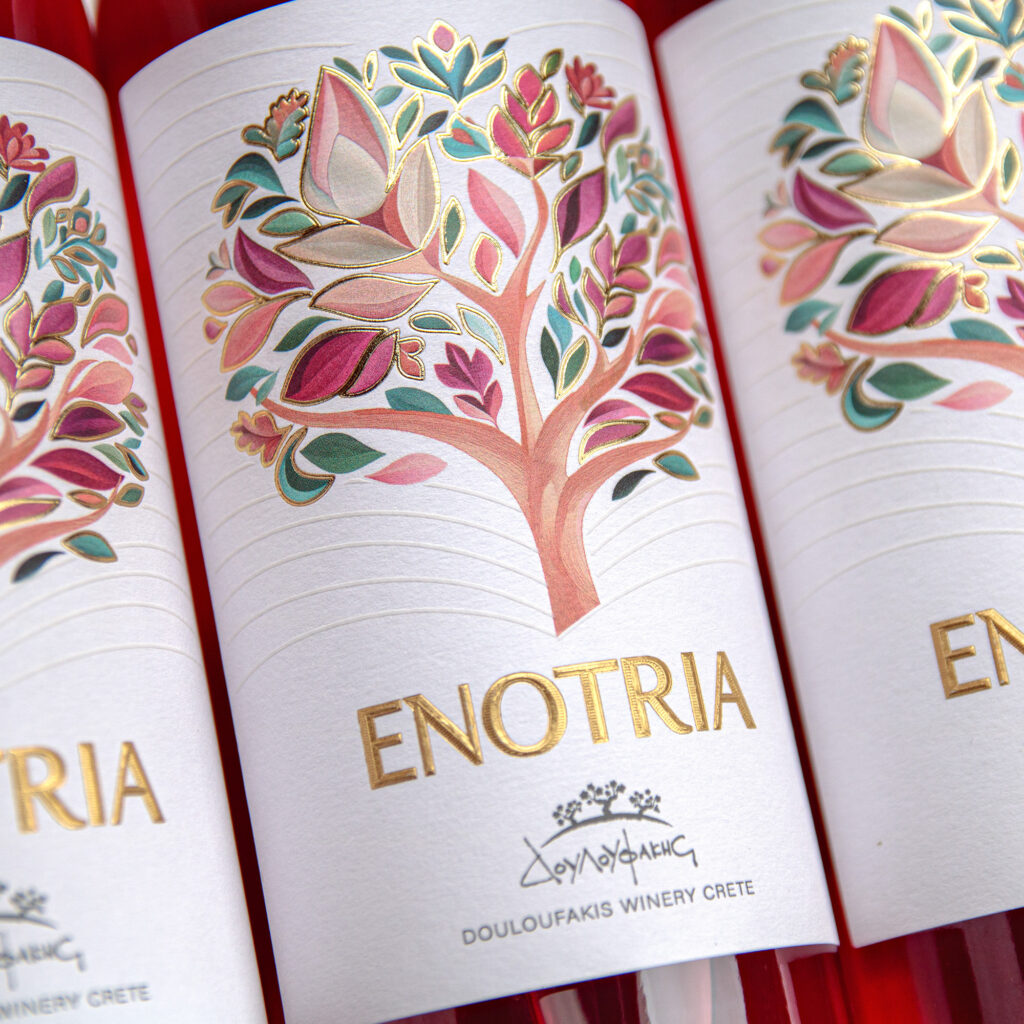
The characteristics of wine from Kotsifali
Kotsifali produces a “typically Mediterranean” red wine: light in color, aromatic, with relatively high alcohol content, soft tannins, and moderate acidity. It is mainly cultivated in the Heraklion region of Crete, yielding wines that are full-bodied, fragrant, and of moderate acidity.
It is often used in blends to soften more astringent varieties like Mandilaria. When blended with Syrah, it creates a complex and very intriguing wine, balancing structure and elegance.
Wines containing Kotsifali in their blend are highly food-friendly and pair beautifully with rich meat dishes, stews, traditional Greek casseroles, sausages, and flavorful grilled meats.
Most Kotsifali-based wines are ready to drink upon release, but those with greater concentration—typically aged for several months in oak—can develop well over 5 to 8 years, offering depth, structure, and layered complexity.
DOULOUFAKIS WINES FROM KOTSIFALI VARIETY
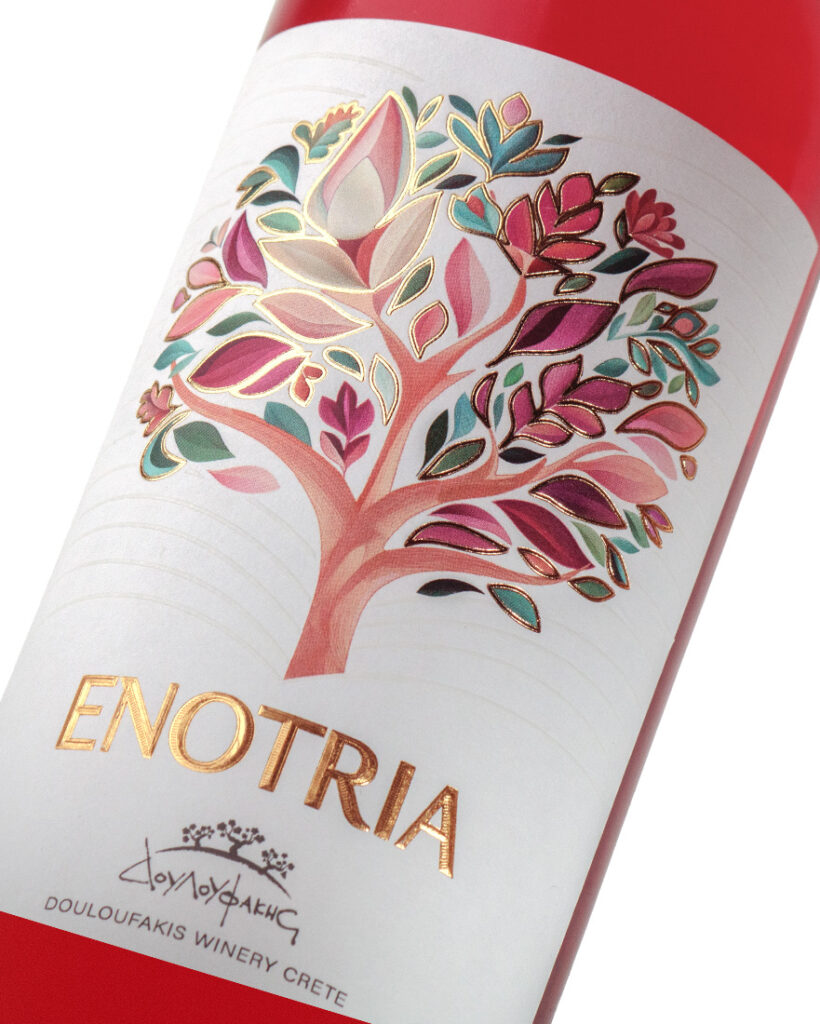
Enotria Rose
- 60% Kotsifali – 40% Syrah
- Dry wine
- Tank fermentation
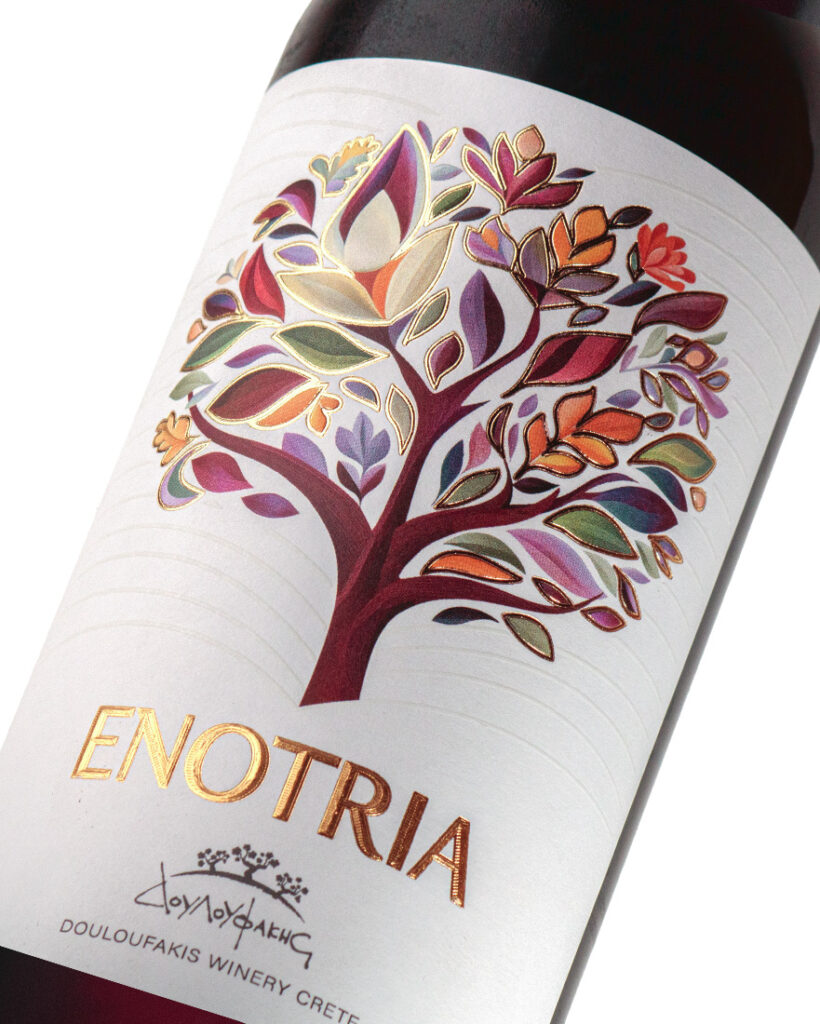
Enotria Red
- 40% Kotsifali – 40% Liatiko – 20% Syrah
- Dry wine
- Tank fermentation
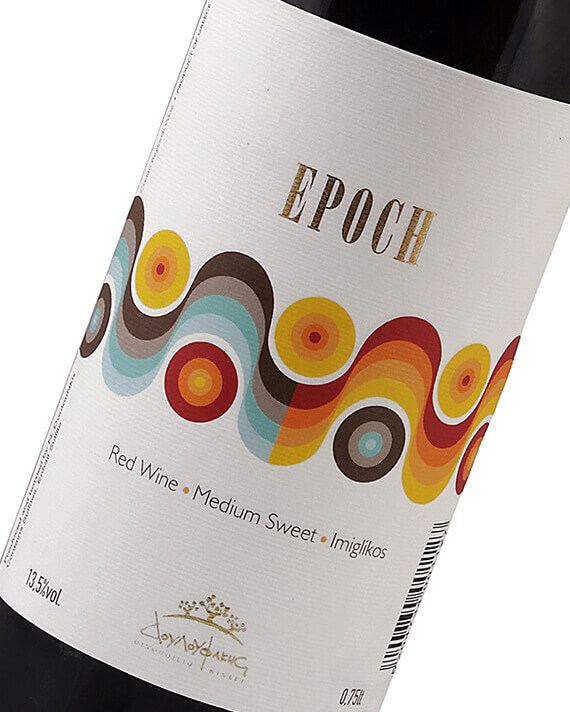
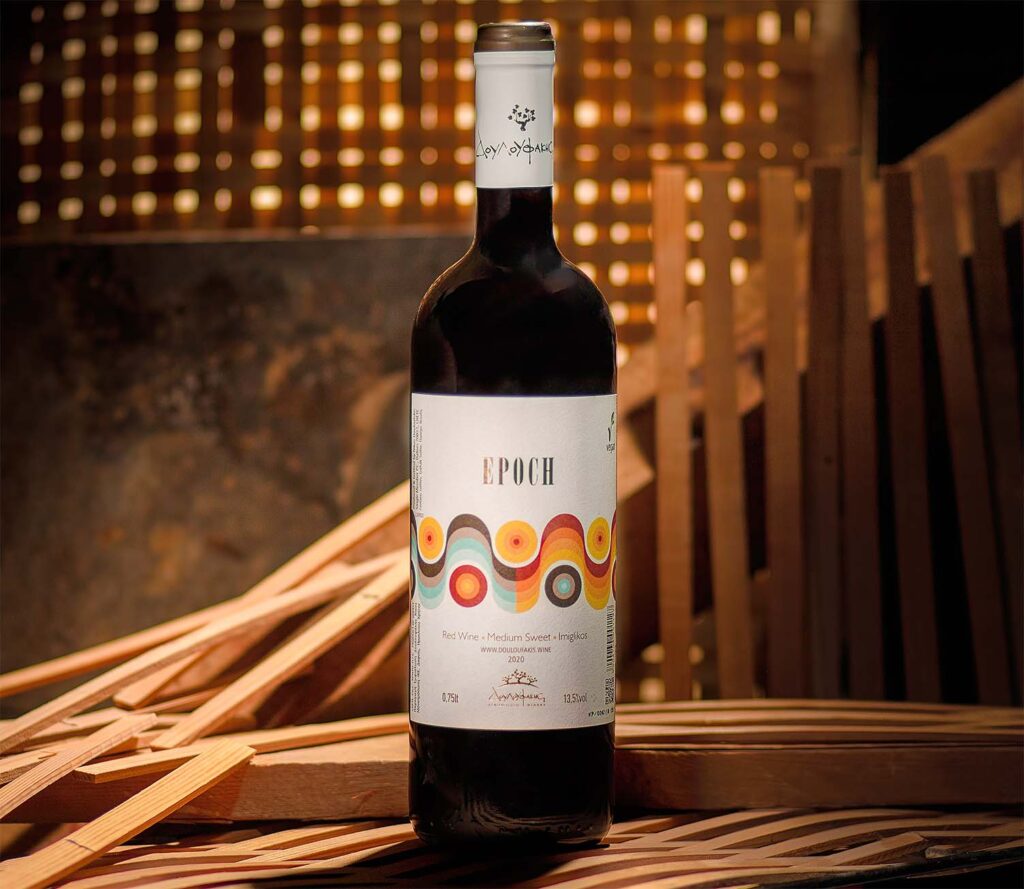
- 20% Kotsifali – 40% Red Muscat – 40% Syrah
- Medium Sweet Wine
- Tank fermentation
Serving Kotsifali
- Like all dry red wines, dry Kotsifali is best served at around 17°C (62.5°F).
For sweet Kotsifali wines, the ideal serving temperature is 10°C (50°F)
Pairing Kotsifali with food
- The food suggestions are correct only if we take into consideration the special character of each wine.